
Rhythms & Roots · Letters to the Churches
Peculiar People, Ridiculous Strategies, and the Future of Friends | Pt 1
By Donnie Hinshaw · May 25, 2026
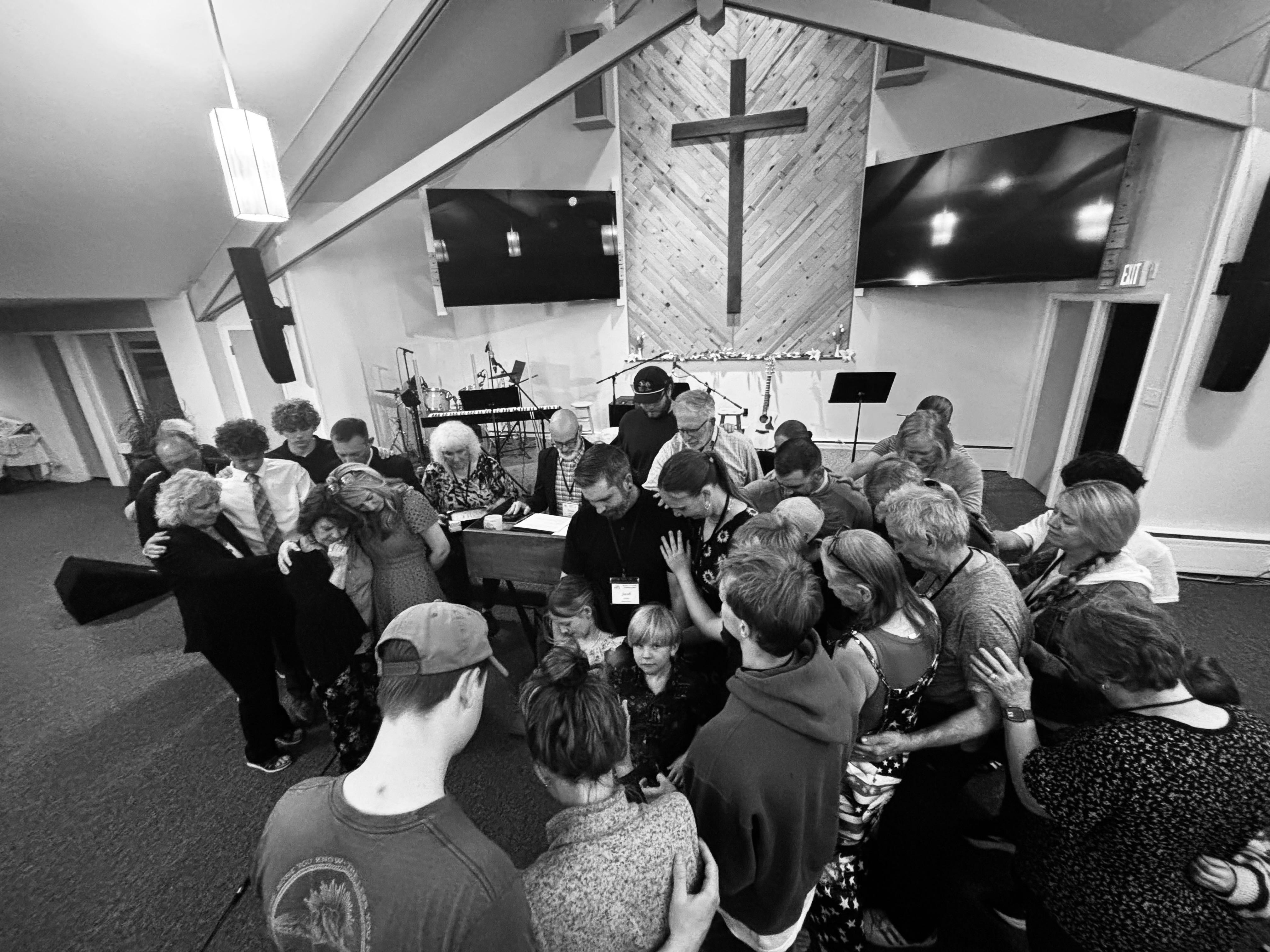
There’s a moment in nearly every movement when survival quietly replaces imagination.
It usually happens slowly.
The language becomes more cautious.
The structures become more protected.
The energy shifts from mission to maintenance.
And eventually, people spend more time trying to preserve what exists than risking what could be born next.
But historically, the people of God have almost always looked a little ridiculous right before renewal happened.
Friends understood this once.
We were known as a peculiar people.
Not because we were trying to be strange—but because obedience to the Spirit often looked unreasonable to the world around us.
Noah built a boat where there was no rain.
Abraham left home without a map.
Gideon shrank the army instead of growing it.
Jesus told a handful of ordinary people they would change the world.
The early church gathered in homes while Rome ruled the earth.
None of those strategies looked efficient.
Most looked foolish.
But Kingdom movements are rarely built by people trying to preserve comfort.
The World Has Changed
Right now, many churches across America—including among Friends—are aging, shrinking, exhausted, and over-structured for a world that no longer exists.
We inherited ministry models shaped for another cultural moment:
attractional programming,
geographic loyalty,
institutional trust,
denominational identity,
large centralized buildings,
predictable rhythms of attendance and engagement.
For decades, those models worked.
But much of that world is gone.
And if we only respond by trying to “save churches,” we may accidentally spend all our energy maintaining decline.
That’s not cynicism.
It’s honesty.
And honesty matters if renewal is ever going to happen.
What If We Released Instead of Retained?
Lately, I’ve been asking a different question:
What would it look like to release people instead of simply retain them?
That question changes everything. Because movements are not built primarily through preservation.
They are built through sending.
Which means the future of Evangelical Friends may require courageous experimentation—not gimmicks, not panic, not trend-chasing—but Spirit-led imagination.
Maybe the future looks more like:
micro-communities around tables,
pastors who are bi-vocational and deeply embedded in neighborhoods,
church plants gathering in coffee shops, homes, gyms, and on trails,
younger leaders empowered before they feel fully ready,
digital discipleship paired with embodied community,
churches partnering instead of competing,
teams being sent instead of waiting for heroic personalities,
legacy churches becoming resource centers for new mission,
camps and retreats becoming incubators for calling,
ordinary people rediscovering that ministry was never meant to belong only to professionals.
Some of those ideas will fail.
But decline is guaranteed if we stop trying.
The Early Friends Movement Was “Ridiculous”
Sometimes we romanticize movements after they succeed.But early Friends did not look impressive at the time.
Uneducated men and women preached publicly. Women led boldly in ways that shocked the religious world. Traveling ministers crossed oceans with little money and enormous faith.
Meetings gathered in homes and open fields.
They challenged social norms, political assumptions, and religious hierarchy.
They depended radically on the leadership of the Holy Spirit.
To many people, they looked reckless.
But movements are almost always born on the edge of what established systems consider reasonable.
And one of the greatest dangers for denominational leadership is becoming so careful that we can no longer dream.
Because the Kingdom of God rarely advances through caution alone.
Resurrection Requires Letting Go
Maybe the deepest question for Evangelical Friends is not:
“How do we keep all our churches open?”
Maybe the deeper question is:
“How do we become the kind of movement willing to die to old forms so new life can emerge?”
That’s resurrection language.
Resurrection always looks impossible before it becomes powerful.
I actually believe younger leaders are hungry for this kind of vision.
Not polished machinery—but authentic mission.
Not institutional performance—but meaningful community.
Not pretending everything is fine—but honest courage rooted in hope.
I don’t think younger generations are asking the Church to become less spiritual.
If anything, they are asking whether we still believe the Holy Spirit actually leads people.
Maybe This Is Pruning, Not Death
The future Church may be:
smaller in some places,
simpler in structure,
more relational,
more missionary,
less polished,
more dependent on prayer,
less institutional,
and more Spirit-led.
And maybe that’s not failure.
Maybe that’s pruning before new growth.
Jesus said that pruning is what happens before fruitfulness.
Not because the vine is dead. But because God is preparing it for deeper life.
Maybe this moment among Friends is not the end of the story.
Maybe it is an invitation.
An invitation to become peculiar people again.
People willing to risk obedience over image.
People willing to dream again.
People willing to build where rain has not yet fallen.
People willing to believe resurrection is still possible.
And honestly?
That kind of movement has always looked a little ridiculous before it changed the world.
— Donnie Hinshaw
Rhythms & Roots
Letters to the Churches












No matching posts or letters.