
Rhythms & Roots · Letters to the Churches
Eyes Wide Open
By Donnie Hinshaw · September 18, 2026

By Donnie Hinshaw
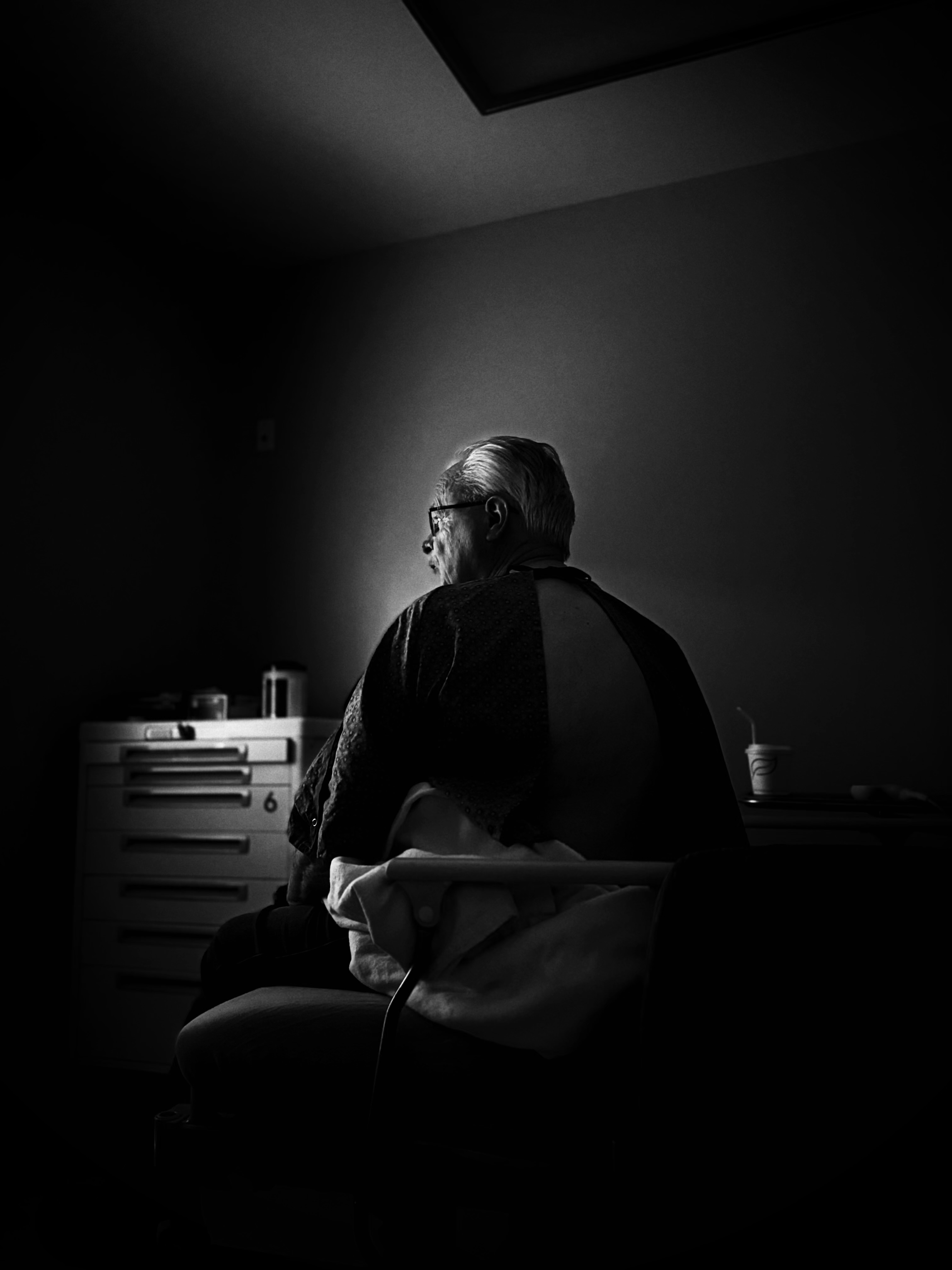
The scene did not need to change. The focus did.
Photography taught me early that looking and seeing are not the same thing. You can point the camera in the right direction, place the subject in the frame, and still miss what is actually there. Sometimes the light is wrong. Sometimes the focus is soft. Sometimes the photographer is standing in the safest place instead of the truest one.
I learned that last lesson while photographing from the open rear doors of a C-17. I was clipped into a harness, surrounded by noise and rushing air, and asked to lean toward an opening every instinct told me to avoid.
“Lean into what scares you,” my boss would tell me. The photographs that mattered would come from places other people did not want to go. If I leaned in, I could help people see what they could never see from where they stood.
The harness was holding me. But I still had to trust it.
This week, while listening to John Eldredge speak about the heart, I found myself returning to that experience. He used Lucy’s discovery of Narnia as a picture of the spiritual life. She walks through an ordinary wardrobe and finds herself in a world of beauty and danger, friendship and battle, joy and grief. The world is more alive than she knew, but she cannot experience it from among the coats. The door must be opened, and then she must step through.
That image names something I have been feeling: the life of God is not merely a set of truths to admire from a safe distance. It is personal and immersive. It is a story we long to be true and then, by grace, discover is true.
The ordinary gifts of life work this way too. Friendship cannot be experienced from a distance. Neither can rest, inspiring work, a road trip, camping under a dark sky, a meal that becomes a memory, or laughter around a table. We can be physically present and still remain guarded and absent. To receive our lives, we have to inhabit them.
And to know God, we have to bring Him more than our ideas. We have to bring Him our hearts.
Francis de Sales wrote that love is the life of the heart. According to what we love, we desire, rejoice, hope, despair, fear, grieve, take courage, and exult. The heart is not a sentimental accessory to the spiritual life. It is the deep center from which life flows. That is why Proverbs 4:23 tells us to guard the heart above all else.
Eldredge invited listeners to notice what is happening there: What have you been dreaming about? Where would you like to go? If life took a wonderful turn, what would happen? Has laughter been flowing easily? When did you last feel lighthearted? What losses have you carried this year?
Those are not frivolous questions. They uncover the places where hope is alive, where grief has settled, and where we may have stopped expecting goodness. They help us offer God the life we are actually living rather than the polished spiritual life we think we should be living.
I hear the same longing in the apostle Paul.
Before Paul wrote Ephesians, he was Saul: intense, certain, and determined to live the story as he understood it. Then the risen Jesus met him on the road to Damascus. Light surrounded him. Jesus called him by name. The man who believed he could see had to be led by the hand.
Paul’s conversion was more than a change of opinion. He encountered a Person. The story of Jesus moved from something outside him—something he was resisting—to the reality that would define his life. It became personal. It became immersive.
Paul also discovered that he was not the only one who knew his story. God had seen every step, including the terrible ones. Christ met him without minimizing the damage he had done, yet did not abandon him to it. Mercy interrupted Saul’s chosen life and led him into a truer one: deeper, riskier, more costly, and full of hope.
When Paul writes Ephesians 1, it feels as if he is trying to put language around this experience and praying that others will enter it too. He does not merely ask that believers learn more. He prays that God will give them wisdom and revelation so they may know Him, and that the eyes of their hearts will be flooded with light.
Paul wants us to see the hope of God’s calling, the riches found in belonging to His people, and the immeasurable power that raised Jesus from the dead. These are not abstract doctrines. They are the landscape of the new world into which grace has carried us.
Sometimes we do not need God to give us something new. We need Him to help us see what He has already given us.
Paul uses the Greek word mysterion in Colossians 1 for God’s purpose once hidden and now revealed: Christ in you, the hope of glory. Christian mystery is not foggy spirituality or secret knowledge. The mystery has a name and a face: Jesus Christ. He has been revealed, and yet there is always more of His love, beauty, strength, and presence to discover.
Mystery does not make faith less real. It makes relationship inexhaustible.
The immersive life with God is not always predictable. It is rarely tidy. It includes adventure and rest, but also grief, resistance, battles, and seasons when the path disappears beneath our feet. It can feel dangerous because love always asks us to relinquish control. Yet it is also exhilarating, because the God who calls us forward is already present in the country we are entering.
Psalm 16 says that God makes known to us the path of life and that fullness of joy is found in His presence. It does not promise a painless path. It promises a life accompanied by God.
Lucy could not stay in the wardrobe. Paul could not return to the life he had planned. I could not take the photograph while standing comfortably inside the aircraft.
The door is open. The harness is holding. The risen Jesus is calling.
Lean in.
Maybe growth is not optional in the way we sometimes imagine. We keep growing because love is alive. We keep going because God is not finished. We open the door because the life we were made for cannot be received from the threshold.
What have you been dreaming about? Where has laughter become difficult? What loss needs to be named? Where have you stopped looking for God because the story did not unfold the way you hoped? What might already be alive on the other side of your fear?
We do not have to manufacture wonder or force an answer. We can simply become present and pray:
God, open the eyes of my heart. Help me see what You are already doing. Then give me the courage to join You.
Scripture for reflection
Ephesians 1:15–23 • Acts 9:1–19 • Colossians 1:24–29 • Proverbs 4:23 • Psalm 16:9–11
Inspiration
This reflection was inspired in part by John Eldredge’s “Homecoming Replenish — Session 1: The Heart,” a Wild at Heart podcast and teaching released August 2, 2026.
Donnie Hinshaw • Eyes Wide Open
Letters to the Churches




No matching posts or letters.